Park Ridge, IL · Garage Door Service
Garage Door Service for Rosemont's 1968-Era Houses
Rosemont's garage doors mostly went up around 1968 - steel panels, wood jamb tracks, original hardware. Park Ridge Garage Door Pros services them from 2 miles away.
- Repairs & new doors
- Springs & openers
- Serving 4 nearby communities
Stocked Parts
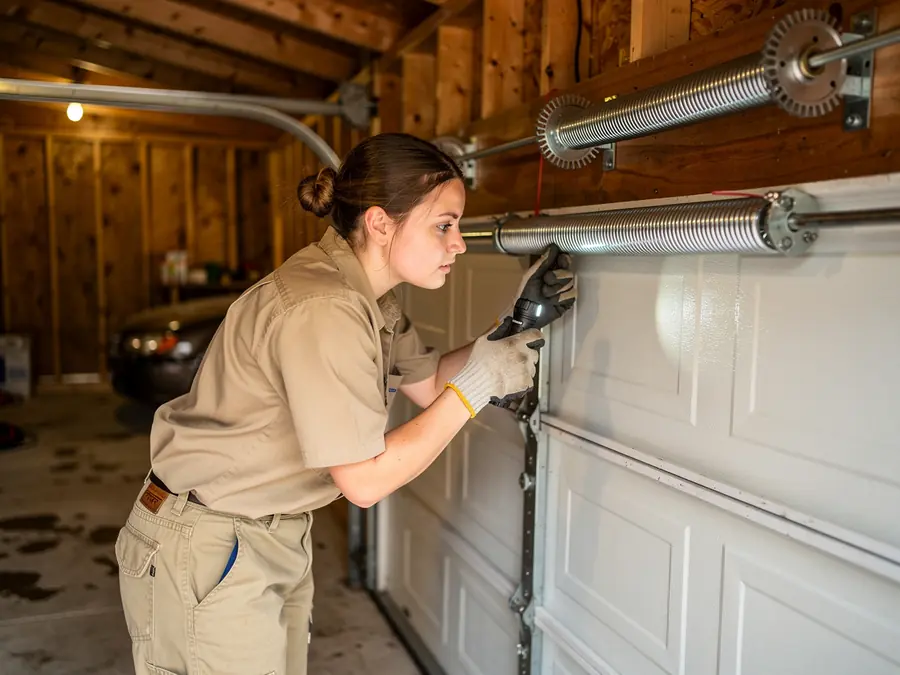
Most of Rosemont's garage stock dates to right around 1968, which means a single-layer steel door, usually a 16-by-7 double or a pair of 8-by-7 singles, hung with no foam core and no vinyl backing. That's a lighter door than anything built after insulation codes tightened up, which matters for spring sizing - put a modern torsion spring rated for an insulated door on one of these and it'll either fail fast or leave the door hard to lift by hand.
We carry extension and torsion springs sized for that lighter original steel, along with the 1-3/4 inch rollers and galvanized cable these doors usually need. Rosemont households sit around a median income of $69,153, so we stock the parts that get a working door running again rather than pushing a panel swap that isn't needed. Track brackets are the other common one - wood jambs from this era shift over fifty-plus years, and the bracket that held true in 1968 is often loose now. We bring the lag bolts and reinforcement plates to reset it on the visit rather than making a second trip for hardware.
What the Fix Involves
On a door this old, the job usually starts with the jamb, not the spring. Wood door frames from the late 1960s have settled unevenly over the decades, and a track that was plumb when it went in is rarely plumb now. We check that before anything else, because a spring or cable replaced against a crooked track fails again within months.
From there it's the parts you'd expect on original hardware: nylon rollers gone brittle, galvanized cable frayed at the drum, a torsion or extension spring that's lost tension after years of cold-to-warm cycling. Rosemont sits in a moderate-cold climate band, and that swing is hard on original rubber and nylon parts that were never built with today's UV-stabilized compounds. We also look at the stop molding and weatherstrip, since original installs rarely had any insulation at the door edge and gaps there get worse as the jamb moves. The work is mechanical and takes a visit to diagnose properly - we don't quote a spring job over the phone on a door we haven't opened.
Doing It Yourself
A torsion spring under tension can take a finger or worse, and on a door this old you're also dealing with a jamb that's moved out of square, which changes how the hardware sits compared to a modern install. We don't recommend DIY spring work on any door, but it's a harder call here specifically because the bracket and track positions on a 1968 install aren't what a newer repair guide assumes.
There's plenty you can safely do yourself: tighten visible hardware, lubricate rollers and hinges, clear the track of debris, and test the auto-reverse safety feature by setting a block under the door and running it down. If the door is noticeably heavier to lift by hand than it used to be, that's a spring losing tension, and it's worth a call rather than a wrench. We'll be straight about it when a repair isn't worth doing - a cracked original panel paired with a shot spring is often the point where patching costs more over time than replacing the door.
Booking a Visit
We run out of Park Ridge, two miles from Rosemont, and cover the town's roughly 1,757 households as part of our regular route rather than from a branch location here. That short distance means a Rosemont call doesn't sit behind a long drive the way some of the farther towns on our list do.
When you call, tell us the door's approximate age if you know it - for most houses here that's going to land near 1968 - and whether it's lifting unevenly, stuck, or just loud. That gets us bringing the right spring and roller stock on the truck instead of guessing. You can see the full rundown of what we cover in Rosemont on our local service page, or check the broader list of work we do out of Park Ridge on the main service page.
Frequently asked questions
How old are most garage doors in Rosemont?
The median house here dates to around 1968, and most of the original garage doors that haven't been replaced are single-layer steel without foam insulation. That puts them squarely in the window where springs, rollers, and cable wear out from age rather than from a specific incident, and where hardware sizing doesn't match what's sold for newer insulated doors.
Do you have a branch in Rosemont?
No. We run out of Park Ridge, about two miles away, and cover Rosemont as part of our regular route. There's no local depot here, just a short drive from our shop.
Is it worth replacing an original 1968 door instead of repairing it?
Sometimes. If the panel is cracked or rusted through and the spring and rollers are also shot, repair costs can stack up to where a new door makes more sense. If it's one failed part on an otherwise sound panel, repair is usually the better call. We'll tell you straight which situation you're in.
What's the most common failure on these older doors?
Brittle original nylon rollers and torsion or extension springs that have lost tension are the two we see most, often alongside a track bracket that's shifted because the wood jamb has settled over the decades. The cold-to-warm swings typical of this climate band speed up wear on the original rubber and nylon parts.
Book garage door service in Park Ridge
Call now or request a quote - tell us what the door is doing and where you are.