
Park Ridge, IL · Garage Door Service
What a House Built in 1965 Means for Your Garage Door
Park Ridge homes built 1938-1996 often have garage doors with no insulation rules behind them. Here's what that means in our cold winters and when to act.
- Repairs & new doors
- Springs & openers
- Serving 4 nearby communities
The Problem
Most houses in Park Ridge went up between 1938 and 1996, with the median landing around 1971 and the bulk of the stock dating to the 1960s and '70s. That matters more than people think when it comes to the garage door. Back when these houses were framed, there was no code requirement forcing builders to put an insulated door on an attached garage. A lot of them got a single layer of steel, or in the older end of that range, wood panels with no core at all. No foam, no vapor barrier, no thermal break at the track. The door was built to keep rain and raccoons out, not cold air. If your house falls in that 1938-1996 window, which covers the large majority of homes here, there's a real chance the door hanging on your garage right now was never designed to hold heat. You can usually tell by feel: put your palm flat on the inside of the door in January. If it's as cold as the air outside, that's your answer. This isn't a flaw in the door - it did exactly what it was built to do. It just was never built for what people now expect an attached garage to be, which for a lot of Park Ridge houses is storage, a workshop, or space that backs right up to a bedroom wall.
What Local Conditions Do
Park Ridge sits in a cold, moderate climate band, and that's the detail that turns an old uninsulated door from a minor annoyance into an actual problem. Steel contracts in low temperatures, and on a door with no insulated core, that contraction shows up as warping at the bottom panel, gaps along the weatherstrip, and a slam-fit that used to be tight going loose. On 1960s and '70s builds especially, the track hardware and door panel were matched to each other when new; decades of winter expansion and contraction loosen that fit panel by panel. The bigger issue is what it does to the space around it. An attached garage with an uninsulated door bleeds cold straight into the house - through the shared wall, through any room built above it, through plumbing that runs along that wall. In a house built before insulation rules existed for this kind of door, that's not a hypothetical; it's just how the house was put together. You feel it as a cold room upstairs or a chillier kitchen if the garage sits underneath it, long before you ever think to blame the garage door itself.
When to Get Help
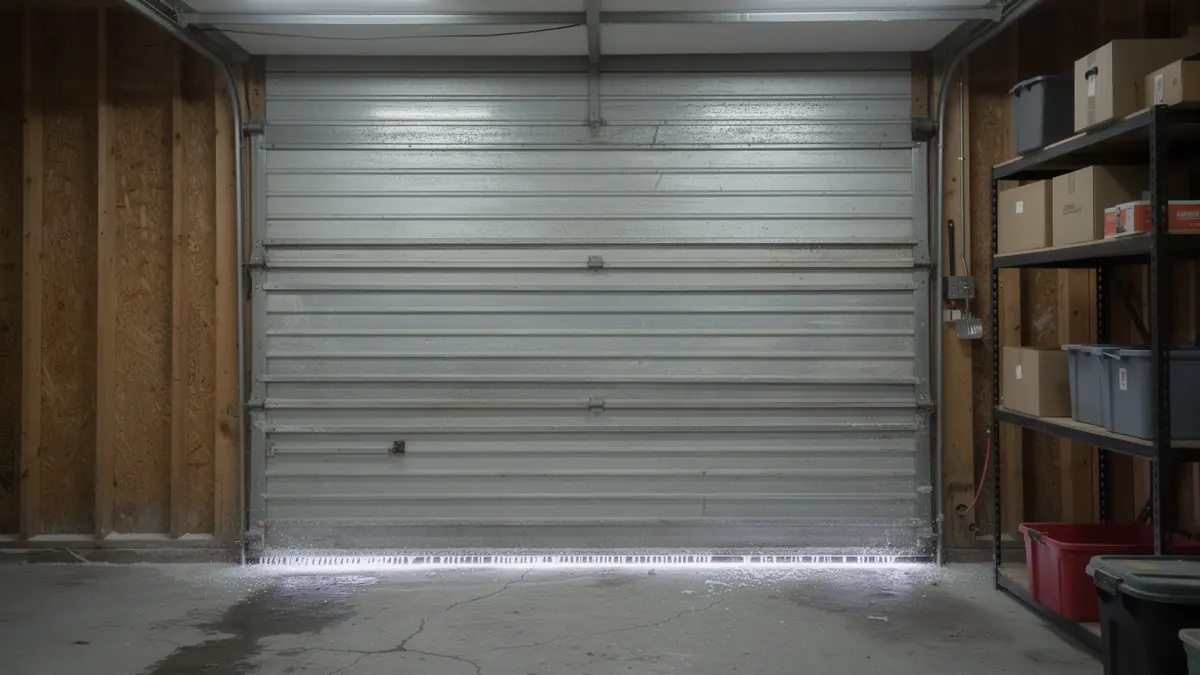
A few signs are worth a call rather than a wait-and-see. If you see daylight around the edges of a closed door, or frost forming on the inside face of the panel in winter, the door isn't sealing and isn't holding any heat it might once have held. A bottom panel that's visibly bowed or cracked from repeated cold-contraction cycles is a structural issue, not just a cosmetic one, and it usually means the door is working harder on its springs and opener than it should. If the garage backs onto a room you use - an office, a bedroom, a laundry room - and that room runs noticeably colder than the rest of the house in January, the door is a reasonable first thing to check before you blame the furnace. None of this is an emergency the way a snapped spring is. It's worth a look, not a same-day panic call, unless the door is also failing to seal shut or the opener is straining against a panel that's binding in the track.
Doing Nothing For Now
Here's the honest part: if your door from the 1960s or '70s still opens, closes, and seals reasonably well, replacing it purely for insulation isn't always worth doing right away. A full insulated door is a bigger job and a bigger cost than most people expect, and if the panel, springs, and track are all still sound, that money might be better spent elsewhere for now. A cheaper interim step is new weatherstripping and a bottom seal, which won't add an R-value your door was never built with, but will cut down the draft noticeably for a fraction of the cost. Where it stops making sense to wait is once the panel itself is warping or cracking from years of cold cycling - at that point you're not choosing between insulated and uninsulated, you're choosing between a door that still functions and one that doesn't.
Frequently asked questions
How do I know if my Park Ridge house has an insulated garage door?
Houses here built in the 1960s and '70s, which is most of the stock, typically didn't come with insulated doors since there was no rule requiring it at the time. Check by tapping the panel - a hollow, thin sound usually means a single steel skin with no foam core behind it.
Is it worth insulating an old garage door instead of replacing it?
If the door still opens, seals, and runs well on its springs and track, adding weatherstripping and a bottom seal is a reasonable low-cost step. It won't match a true insulated panel, but it cuts the draft. Once the panel itself is warped or cracked, insulation add-ons stop making sense.
Why is my room above the garage so cold in winter?
In houses built before insulation standards covered garage doors, an uninsulated panel lets cold straight through the shared wall and up into any room built over the garage. That's common in the 1960s and '70s stock that makes up most of Park Ridge, and it's often mistaken for a furnace or window problem.
Related garage door services in Park Ridge
More garage door guides
Book garage door service in Park Ridge
Call now or request a quote - tell us what the door is doing and where you are.