Park Ridge, IL · Garage Door Service
Garage Door Off Track: Why It Happens Here and How We Fix It
If your garage door has jumped the track in Park Ridge, we explain why older 1960s-70s tracks and cold Chicago winters cause it, and what the repair involves.
- Repairs & new doors
- Springs & openers
- Serving 4 nearby communities
Stocked Parts
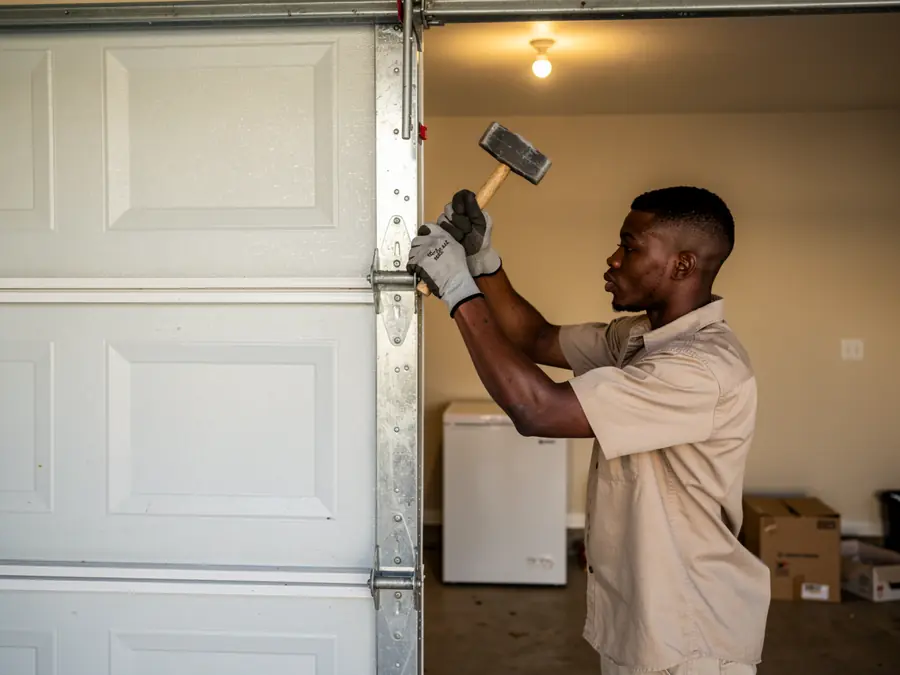
When a door jumps the track, the fix usually comes down to three things: the roller, the track section, and the hardware holding the track to the jamb. We carry the roller sizes and track gauges that match the builder-grade doors common across this service area - the nylon and steel rollers sized for 1960s and 70s torsion setups, plus standard vertical and horizontal track sections in the lengths those garages use.
What we don't carry on the truck is every obsolete track width. Some original doors from the 1938-1996 build range used proprietary bracket spacing or track profiles that nobody has made in decades. On those jobs we either adapt the opening with a compatible modern track or, if the frame's too far gone, we tell you straight that a special-order match could mean a wait instead of a same-visit fix. We'd rather say that up front than quote a part we don't have.
For most homes, though, the parts are common enough that a bent track or a popped roller gets replaced on the spot rather than ordered in. That's the case for the bulk of the housing stock we see, which still runs the same basic torsion hardware it had when it was built.
Why This Fails Locally
The housing in this service area mostly went up between 1938 and 1996, with the typical home dating to 1971, and the stock leans heavily 1960s and 70s across the eighty-some named areas it covers. That generation of garage came with narrow steel track and lighter-gauge rollers than what goes in new construction today. Fifty-plus years of use wears the inside edge of that track smooth and, in some cases, slightly out of true - and a track that's even a little bowed is a track a cable or roller can jump.
Cold is the other half of it. This area sits in a cold-moderate climate band, which means the slab the track brackets are lagged into goes through a real freeze-thaw cycle every winter. Concrete moves, brackets shift fractions of an inch, and a track that was plumb in October can be slightly racked by February. On a newer door with modern adjustable hardware that's a minor issue. On an original 1960s or 70s track with no slack built in, it's often enough to pop a roller clean out of the rail.
Put those two things together - older, narrower track and seasonal slab movement - and you get the pattern we see on off-track calls: it's rarely a one-time accident, it's hardware that was due.
The Symptom
Off track shows up a few different ways, and they don't all look the same. Sometimes the door stops mid-travel and binds hard, refusing to go up or down because a roller has left the rail entirely. Other times it still moves but makes a grinding or scraping sound low on one side, which usually means a roller is riding the edge of the track instead of sitting inside it. On double doors, it's common for one side to droop or hang crooked at the bottom - that's the cable or track on that side losing its grip.
On older tracks specifically, you'll sometimes see the metal itself pinched or slightly narrowed at the spot where it bolts to the jamb, a sign the bracket has worked loose over years of seasonal movement. If you catch it at that stage - door still runs, just noisy or slightly crooked - it's a much smaller job than waiting until a roller fully derails and the door comes to a stop halfway open, which is where most people actually call.
What the Fix Involves
First step is figuring out whether the track is bent or the rollers are worn, because those get fixed differently. A track that's only slightly out of alignment gets re-anchored and squared against the jamb - loosen the brackets, reset the plumb, retighten. A track that's actually bent or kinked, which is common on the original steel sections from the 1960s and 70s once they've taken a hit or warped from age, gets that section replaced rather than bent back, since bent steel track rarely holds true a second time.
Worn rollers come out and get swapped regardless, since a track realignment with the same tired rollers just sets up the next jump. We also check the cable and the bottom bracket on that side, because a derailed roller sometimes takes a cable with it.
If the track is original to a house from that 1938-1996 era and more than one section is bent or badly worn, we'll say so plainly: patching one section when the rest of the track is in similar shape just buys a few more months before it happens again, and at that point full track replacement is the better money.
Frequently asked questions
Why does my garage door keep coming off the track every winter?
In this climate, the concrete slab your track brackets are anchored to moves slightly through the freeze-thaw cycle each winter. On older, narrower track from the 1960s or 70s that movement is often enough to shift the rail out of plumb and let a roller pop loose, especially if the bracket hardware has already loosened over the years.
Can an off-track door be fixed or does it need full replacement?
Most of the time it's a repair - realign the track, replace worn rollers, check the cable. Full track replacement only makes sense when a section is actually bent or kinked, which is common on original steel track from older builds. We'll tell you which situation you're in before we start work.
Is it safe to keep using the door if it's off track?
No. A door that's partially derailed can come down unevenly or drop a panel, and the spring system isn't designed to carry that kind of uneven load. Leave it closed and off power until it's looked at rather than forcing it up and down.
By Neighborhood
Off Track Repair across the Park Ridge area
We also handle off track repair in these Park Ridge-area suburbs.
Book garage door service in Park Ridge
Call now or request a quote - tell us what the door is doing and where you are.