
Park Ridge, IL · Garage Door Service
Garage Door Installation Built for Park Ridge's 1960s and 70s Houses
Installing a new garage door in Park Ridge means matching 1960s-70s framing and cold-climate insulation needs. Here's what that actually involves.
- Repairs & new doors
- Springs & openers
- Serving 4 nearby communities
Stocked Parts
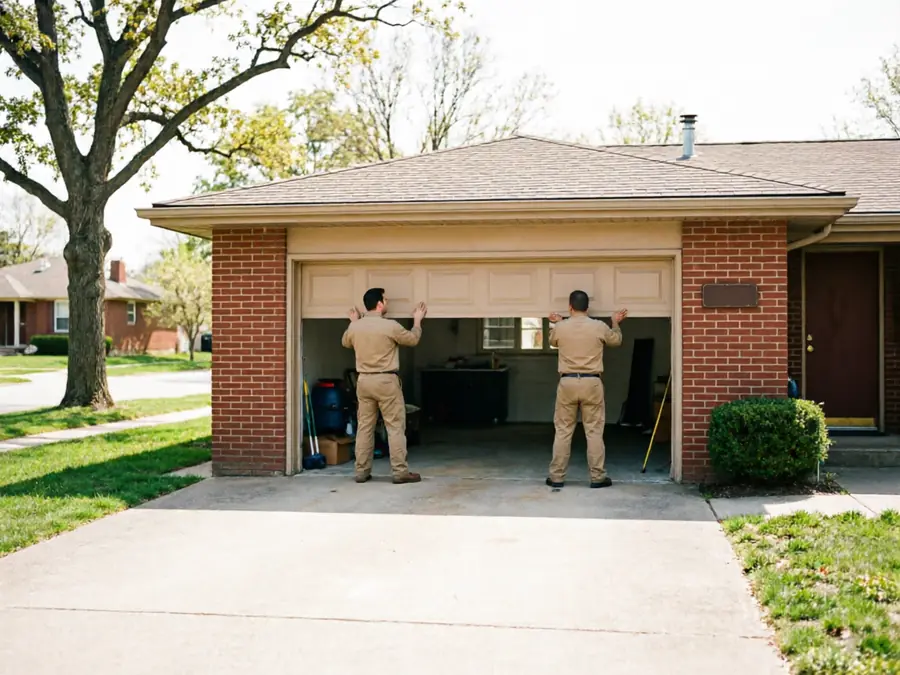
Most of the trucks working this part of the Chicago suburbs carry 16x7 and 9x7 steel sectional doors in the track widths that fit houses built between 1938 and 1996, with the bulk of that stock dating to the 1960s and 70s. That matters because a lot of garages here were framed for door openings that newer manufacturers don't treat as standard anymore - the header heights and jamb widths run narrower than what you'd spec for new construction. We keep torsion springs sized for the heavier insulated doors that make sense in a cold climate, along with the jamb brackets and track that fit older block and frame construction instead of newer stud-only openings. What we don't carry on the truck: custom architectural doors with non-standard window grids or odd widths outside the common range. Those get special-ordered, and that adds lead time - worth knowing before you set a installation date.
Why This Fails Locally
A garage built in 1971, which is the median year for housing in this area, was almost never insulated to the standard a cold-climate winter calls for. Single-layer steel or old wood doors from that era let heat out fast, and in a moderate-cold climate band that means the opener, the springs, and the weatherseal all work harder for more months of the year than they would somewhere milder. Add decades of expansion and contraction in the original track mounts - block walls shift, wood jambs settle - and you get openings that are no longer square even if the door itself still looks fine. That's the real reason a straight swap-in replacement door sometimes won't seal right: the problem isn't the door, it's the forty-plus-year-old opening it's going into. New installation here means squaring and resetting the frame as part of the job, not just hanging a door on what's already there.
The Symptom
The call usually starts the same way: the old door still closes but daylight shows at the bottom corners, or the weatherstrip has compressed flat and the door won't seat tight no matter how the opener's limit is adjusted. Sometimes it's the opposite - the door binds halfway up because the track, original to a house from the 60s or 70s, has pulled slightly away from a settled jamb. Homeowners often try tightening the track bolts or swapping the seal first, which is reasonable, but on an opening that's moved out of square those fixes buy a season at most. The tell that you're looking at a replacement rather than a repair is when the gaps aren't even on both sides - that's a framing issue, not a worn-part issue, and no amount of new weatherstrip corrects it.
What the Fix Involves
A proper installation starts with checking the opening against plumb and square, not assuming the original frame is still true after fifty-plus years. On houses from this era that usually means shimming or resetting the jamb brackets before the new door ever goes up. From there it's sizing the door to the actual opening (not the nominal one stamped on the old unit), setting new track to match, and installing springs rated for the door's actual weight - insulated doors run heavier, and undersized springs are a callback waiting to happen. Given median household income in this service area runs over six figures, most owners here opt for a properly insulated door rather than the cheapest sectional available, since the difference shows up on heating bills every winter. The job typically runs half a day to a full day depending on whether the opener is being replaced too. What doesn't make sense to fix: an opening so far out of square that resetting it costs more than the door itself - at that point we'll tell you straight rather than bill for a patch job.
Frequently asked questions
How do I know if I need a new door or just a repair?
If the gaps around the door are uneven - wider on one side than the other, or worse at the bottom than the top - that points to the frame having shifted, common in houses built in the 1960s and 70s. A repair on an out-of-square opening rarely holds. If the gaps are even all around, a repair or seal replacement is usually enough.
Will a new door fit my original 1960s or 70s opening without framing work?
Sometimes, but don't assume it. Openings from that era often settled over the decades, and track mounts in block garages shift differently than stud-framed ones. We check square before quoting so you're not paying for a door that won't seal in the opening you have now.
Do you stock insulated doors for cold-climate winters?
Yes, insulated steel sectional doors in the common sizes are on the truck. Custom widths or special window grids aren't stocked and get special-ordered, which adds lead time - we'll tell you upfront if that's the case for your opening.
Book garage door service in Park Ridge
Call now or request a quote - tell us what the door is doing and where you are.