Park Ridge, IL · Garage Door Service
What That Garage Door Noise Is Telling You
In Park Ridge homes built mostly in the 1960s and 70s, a grinding, popping, or screeching garage door usually points to one of a few specific, cold-weather-driven causes.
- Repairs & new doors
- Springs & openers
- Serving 4 nearby communities
The Problem
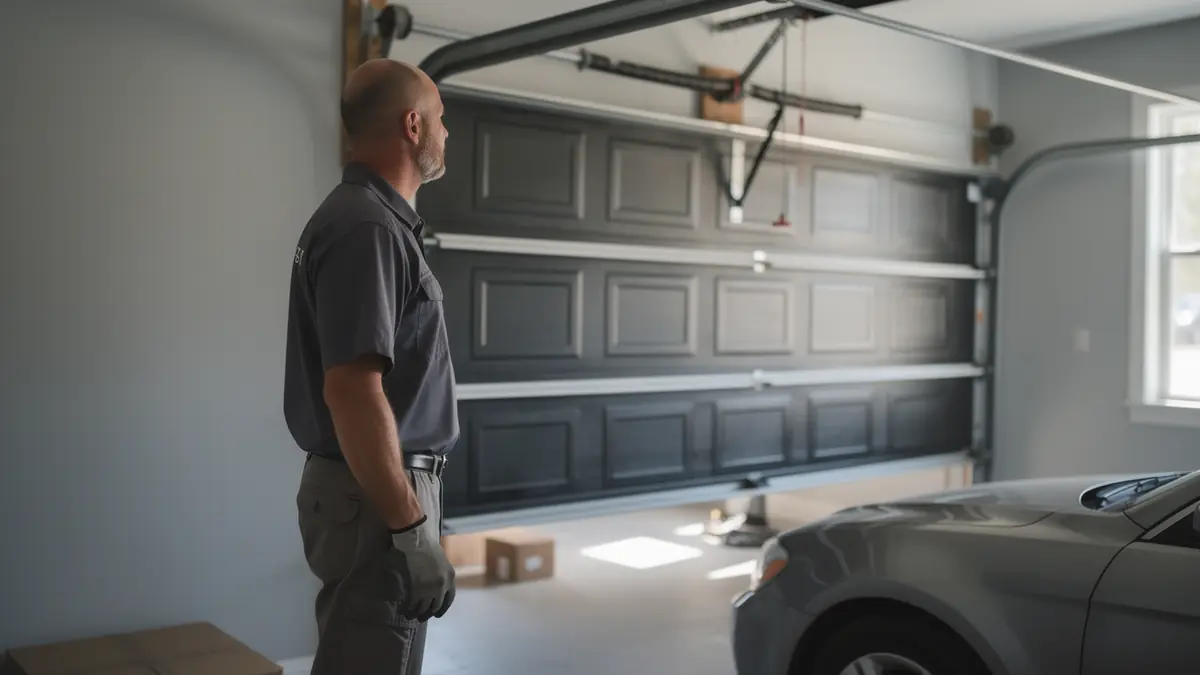
A door that's gone quiet for years and suddenly starts grinding, popping, or screeching isn't being dramatic. It's telling you something broke, is about to break, or has been running dry for too long. In Park Ridge, where most houses went up between 1938 and 1996 with the bulk of that stock dating to the 1960s and 70s, the door and opener hardware on a lot of these homes is original or close to it. That means steel rollers instead of nylon, older extension or torsion springs, and track that's had forty-plus years to collect dust, rust, and loosened brackets.
The sound changes depending on what's failing. A rhythmic thump as the door moves usually means a flat spot on a roller or a bent track section. A sharp bang, often loud enough to startle someone in the next room, is almost always a spring letting go. A high metallic screech is dry hinges or rollers with no lubricant left in them. None of these fix themselves, and most get louder and more expensive to ignore the longer they run.
What Local Conditions Do
This area sits in a cold, moderate climate band, which means steel hardware goes through a real freeze-thaw cycle every winter and spring. Metal contracts in the cold, grease stiffens or dries out faster than people expect, and the day-to-day swing in temperature works screws and brackets loose over the years. On a door from the 1960s or 70s, that's four or five decades of expansion and contraction on the same hinges and track bolts.
Cold also changes how a spring behaves under load. A torsion spring that's already worn, thin, or slightly rusted is more likely to snap on a cold morning than a mild one, because the metal is less forgiving when it's contracted. If your door has started making noise mainly in winter, or the sound seems worse on the coldest days, that's consistent with hardware that's aging and now getting pushed past its tolerance by the weather, not just normal wear.
When to Get Help
Call before the door stops working, not after. A spring that's starting to sound different, loud banging, visible rust on cables, or a door that hesitates partway up are all signs worth a look now rather than in a week. If a spring has actually broken, that's not a DIY fix and not a wait-and-see situation. A door under full spring tension with a broken spring can injure someone trying to force it open or closed by hand.
Same goes for a door that's suddenly much heavier to lift by hand, or one where the opener strains and makes a different motor sound than before. On original 1960s-70s hardware, parts wear out together, so one symptom often means two or three things are close behind it. We don't recommend pushing through that just to save a call.
Doing Nothing For Now
Not every noise means you need a truck out that day. A single squeak on an otherwise smooth-running door, especially one that's been quiet for a while and just needs lubrication, can often wait a few days without risk. We won't tell you every sound is an emergency, because most aren't.
What we will say is that on a door this old, waiting too long tends to turn a $40 roller job into a spring and track repair, because one worn part puts extra load on the next one. If the noise is new, getting louder, or happening every single cycle, that's the point where waiting stops saving money and starts costing it.
Frequently asked questions
Why does my garage door only make noise in the winter?
Cold makes steel contract and grease stiffen, so hardware that's a little worn gets louder in winter even if it runs fine in summer. In this climate band, that seasonal swing is hard on decades-old springs and track, which describes a lot of the door hardware still in service on houses built in the 1960s and 70s around here.
My door is original to the house, built sometime before the 90s. Should I worry?
Not automatically, but it's worth paying attention. Most homes in this area date to between 1938 and 1996, with the bulk from the 60s and 70s, so a lot of original hardware is simply old, not broken. New noise, hesitation, or visible rust on that hardware is the signal to get it looked at rather than wait.
Is a loud bang always a broken spring?
It's the most common cause of a sudden loud bang on an older door, especially in cold weather when a worn spring is more likely to fail. Treat it as broken until someone confirms otherwise, and don't try to operate the door by hand or with the opener until it's checked.
Related garage door services in Park Ridge
More garage door guides
Book garage door service in Park Ridge
Call now or request a quote - tell us what the door is doing and where you are.