Park Ridge, IL · Garage Door Service
Garage Door Repair Built Around Park Ridge's Older Housing Stock
Torsion springs and openers sized for Park Ridge's 1938-1996 housing stock, repaired by a crew that stocks the parts cold winters break first.
- Repairs & new doors
- Springs & openers
- Serving 4 nearby communities
Stocked Parts
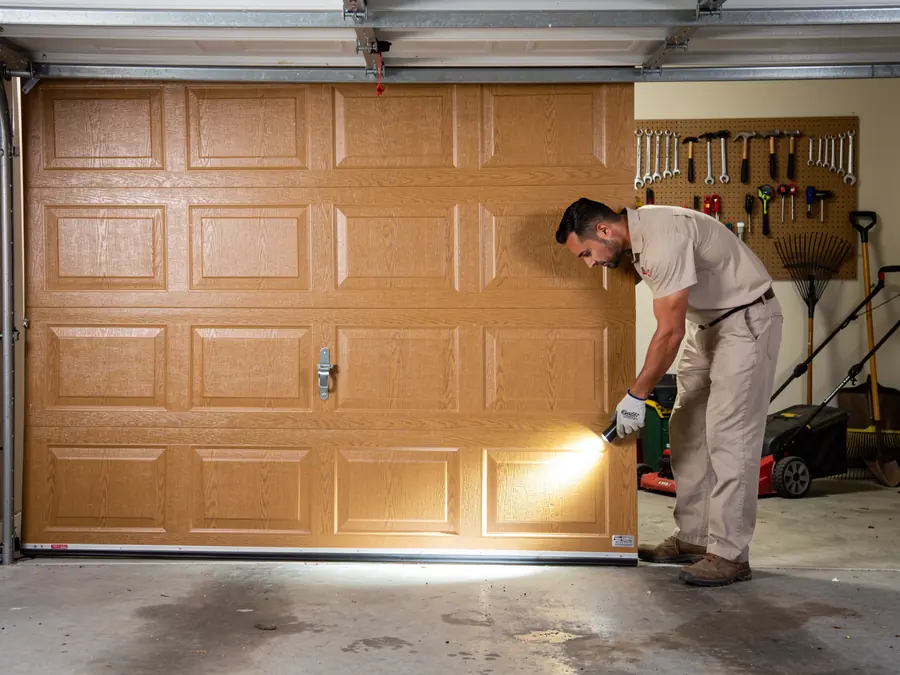
Most of the garage door hardware failing around Park Ridge right now was installed when the house was built, or close to it, and that means a lot of torsion springs, drums, and cable sized for doors going back to the 1960s and 70s. The housing here runs 1938 to 1996, with the typical build year sitting around 1971, so we carry spring sizes and track hardware that newer suburbs further out don't need as often. We keep standard torsion springs in the wind counts that match that era's door weight, plus the rollers and hinges that wear out on original steel sectional doors. What we don't stock on the truck is anything for a door we haven't seen - oversized commercial track, odd custom panel sizes, and specialty opener boards get ordered once we've confirmed the exact part, which can add a day or two. We'd rather tell you that up front than promise a same-visit fix we can't back up.
Why This Fails Locally
Put a torsion spring from 1971 through fifty winters in a cold-moderate climate and the steel fatigues on a predictable schedule, not a random one. Park Ridge sits in that cold band, and the freeze-thaw cycle each year works on spring coils and cable ends the same way it works on sidewalks - small flexes that add up. Houses built in that 1960s-70s window across this part of the Chicago area also tend to share the same garage layout: single torsion spring over a double door, galvanized but not the heavier coated springs newer code calls for. That single-spring setup carries the whole door's weight with no backup, so when it goes, the door doesn't ease down, it drops. Newer construction elsewhere often has dual springs or heavier-rated cable as standard, which is part of why this exact failure shows up so often on the older side of town and less on recent builds.
The Symptom
The call almost always starts the same way: the door was fine yesterday, and this morning it won't budge, or it came down hard and fast with a loud bang from the spring area. Sometimes it's the opener straining and reversing instead of lifting - that's usually the spring already gone and the motor trying to do a job it was never built for. Cold mornings make it worse. Metal contracts in the cold, cable goes a little slack, and a spring that was already near the end of its life picks that morning to let go. If you're hearing a snap followed by the door feeling loose or unbalanced when you lift it by hand with the opener disengaged, that's a broken torsion spring, not an opener problem, even though the opener usually gets blamed first.
What the Fix Involves
Once we confirm it's the spring, we measure the existing coil, wire size, and wind direction rather than guessing off the door's age, since not every door on a given block was serviced the same way over fifty-plus years. We replace the spring with one rated to the door's actual weight, not just a like-for-like swap, since the wrong wind count can shorten the life of the new spring fast. We check the cable and drums at the same time - on a door this old, if one part failed from fatigue, the other side is usually close behind, and replacing both now costs less than a second call in a few months. If the torsion bar, bearing plate, or track shows rust-through rather than just wear, that's the point where we'll tell you straight that patching it isn't worth the labor and a full hardware replacement is the better spend.
Frequently asked questions
Why did my spring break in cold weather and not before?
Steel contracts as temperatures drop, and a spring near the end of its fatigue life often lets go on one of the first hard cold mornings of the season rather than mid-summer. In a cold-moderate climate like Park Ridge's, that seasonal swing is part of the normal wear pattern on older torsion springs, not a sign anything else is wrong.
Is my door too old to repair instead of replace?
Not usually just because of age - plenty of doors from the 1960s and 70s still run fine once the spring, cable, and rollers are current. We only steer toward replacement when the track or bearing plate has rust-through or the panel itself is damaged, since patching those doesn't hold.
Why does the opener seem to be the problem when it's really the spring?
A torsion spring carries almost all of a garage door's weight. When it breaks, the opener motor tries to lift the full dead weight of the door on its own, which makes it strain, reverse, or stall - the same symptoms people associate with a failing opener.
By Neighborhood
Garage Door Repair across the Park Ridge area
We also handle garage door repair in these Park Ridge-area suburbs.
Book garage door service in Park Ridge
Call now or request a quote - tell us what the door is doing and where you are.