Park Ridge, IL · Garage Door Service
Emergency Garage Door Repair for Park Ridge Homes
Broken spring or dead opener on a cold night in Park Ridge? We stock parts for the torsion hardware and 1960s-70s doors common across this service area.
- Repairs & new doors
- Springs & openers
- Serving 4 nearby communities
Stocked Parts
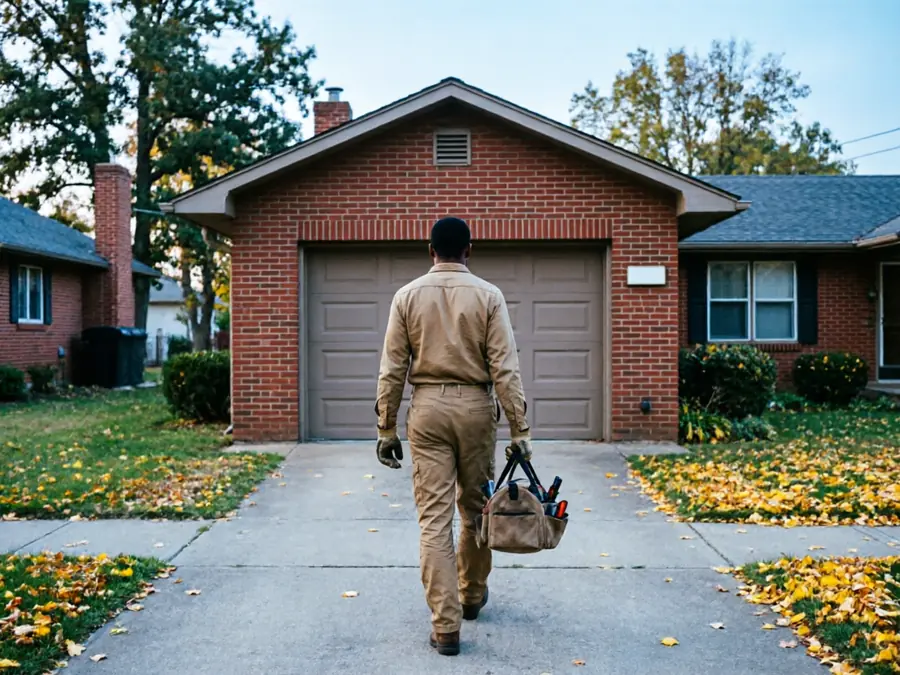
Most of the trucks working this area carry the same short list of parts, because most of the area's houses were built in the same stretch of years. Homes here went up between 1938 and 1996, with the median landing around 1971, and the bulk of the stock across the service area's 80 named communities dates to the 1960s and '70s. That means a lot of torsion springs sized for the original steel doors those builders installed, a lot of single-piece and sectional tracks on the same bracket spacing, and openers that have already been swapped once or twice since the house was framed. We keep torsion springs in the common Park Ridge-era sizes, standard-drum and double-life cables, nylon and steel rollers, and the hinge and bracket hardware that matches 1960s-70s track widths. What we don't stock on the truck is anything custom - a door that was special-ordered or modified from factory spec may need a part we pull in, which can add a day. That's rare here, but it happens on the older end of the housing stock.
Why This Fails Locally
A torsion spring is rated for a set number of cycles, and a door built in 1971 that's still running its original spring has usually burned through that rating years ago. Add a moderate cold climate band and the metal fatigue accelerates every winter: steel contracts, lubricant stiffens, and the spring that was already near the end of its life snaps on the one morning it's below freezing and you're already running late. This isn't a seasonal event so much as a slow failure that shows up seasonally. The same pattern hits cables and rollers on doors from that era - they were specced for the original door weight, and after 40 to 50 years of cycling in a cold-moderate climate, the galvanized coating wears through and rust finishes the job. Houses built after the 1990s in this service area tend to have newer, better-sealed hardware and fewer of these calls. It's the 1960s-70s band that drives most of the emergency volume.
The Symptom
The call usually starts one of two ways. Either the door won't move at all - opener hums, light blinks, nothing lifts - which almost always means a broken spring has left the opener trying to lift the full weight of the door by itself. Or the door moves partway and stops, jerks, or comes down unevenly, which points to a frayed or snapped cable, a cracked drum, or a roller that's jumped the track. On older torsion setups common to this area's 1960s-70s builds, a loud bang from the garage followed by the door refusing to budge is almost always the spring. If the door comes down fast and uneven on one side, stop using the opener - that's a cable, and running the door on a bad cable risks the panel coming off the track entirely.
What the Fix Involves
Spring replacement on these older torsion setups means matching wire diameter, coil length, and wind direction to the original - get any of those wrong and the door is either too heavy to lift by hand in a power outage or so over-tensioned it's dangerous to unwind. Cable replacement means checking the drums and track for wear at the same time, since a cable that snapped from age often means the drum isn't far behind. On a house in this service area's typical 1938-1996 build range, we're also checking the bracket hardware, because original brackets are sometimes undersized for a heavier replacement door someone installed later without upgrading the springs to match. A straightforward spring or cable job is usually a same-visit fix. Where it isn't - a bent track, a cracked panel section, or an opener that's also failed - we'll tell you honestly whether it's worth repairing piece by piece or whether the door's age means replacement is the better money.
Frequently asked questions
How fast can you get to a broken spring in Park Ridge?
We don't quote a fixed response time on this page since it depends on where you are in the service area and what's ahead of you on the schedule that day, but spring and cable failures are our priority calls. Call and we'll give you a real window, not a guess.
Why did my spring break in cold weather specifically?
Steel loses flexibility as it gets colder, and a spring that's already near the end of its cycle life is more likely to snap under that added stress. In this climate band, winter mornings are when years of fatigue finally catch up with an old spring.
Is it safe to open the door myself after a cable snaps?
No. A snapped cable means the door's weight is no longer controlled on one side, and forcing the opener or pulling the door by hand risks it coming off the track or dropping. Leave it closed and call for the repair.
My house is from the 1970s - is that why parts match so well?
Most of this service area's housing dates to the 1960s and '70s, so we carry torsion springs, cables, and track hardware sized for that era as standard stock. It's why most repairs on houses from that period are same-visit jobs.
Related services
Related guides
By Neighborhood
Emergency Garage Door across the Park Ridge area
We also handle emergency garage door in these Park Ridge-area suburbs.
Book garage door service in Park Ridge
Call now or request a quote - tell us what the door is doing and where you are.