Park Ridge, IL · Garage Door Service
Why a Door Goes Off Track Around Park Ridge
Park Ridge homes built mostly between the 1940s and 1970s have track and hardware setups that move more in cold weather. Here's what actually knocks a door off track.
- Repairs & new doors
- Springs & openers
- Serving 4 nearby communities
The Problem
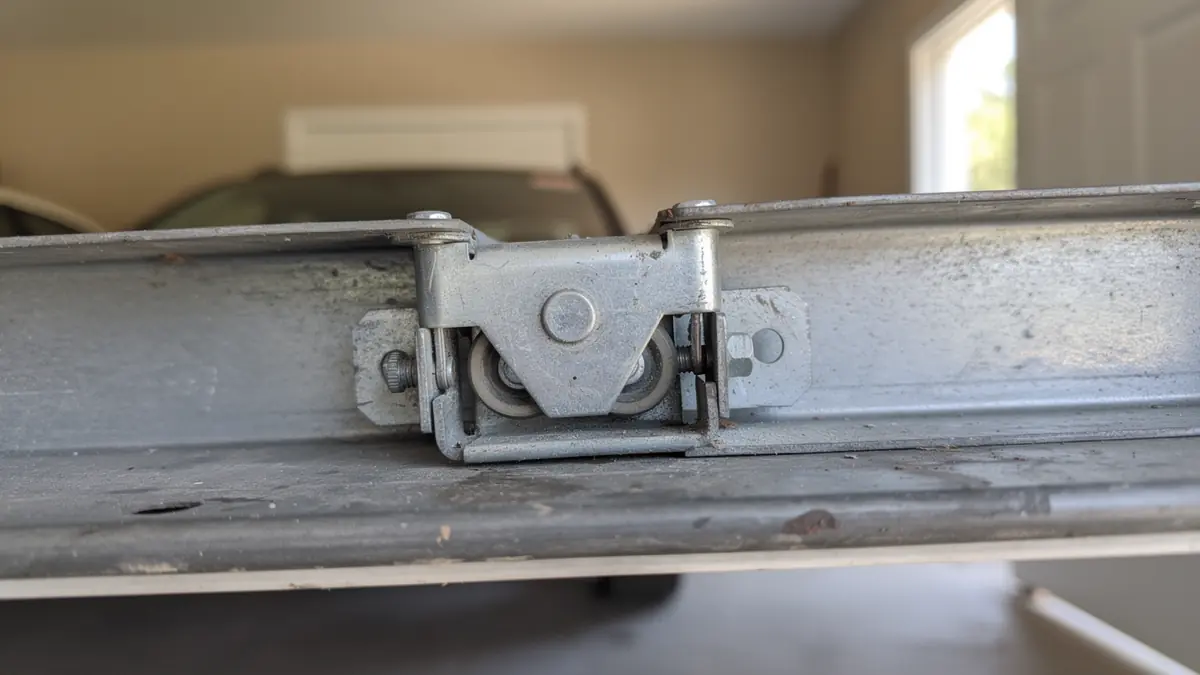
A door off its track almost never happens because the track itself broke. The track is the easy part to blame and the hardest part to actually bend out of shape on its own. What you're really looking at is a chain of small failures upstream: a roller that's worn down and starts binding, a cable that's frayed and lets one side of the door drop before the other, or hinges that have loosened enough that the panel twists as it travels. Once the door isn't square to the track, the rollers start fighting the rails instead of rolling through them, and eventually one side jumps the channel. In a lot of the houses around here, built in that long stretch from the late 1930s through the 1990s with a concentration in the 1960s and '70s, the original track brackets and jamb hardware have had fifty-plus years of seasonal expansion and contraction working the mounting screws loose. That's the starting point for most of the off-track calls we get, not a sudden dramatic break.
What Local Conditions Do
This area sits in a cold climate band, which means the garage goes through a real freeze-thaw cycle every winter, not just a few cold snaps. Steel track contracts in the cold and the wood jambs it's screwed into don't contract at the same rate, so the fasteners work loose a little more every year. On a door that's already 20, 30, or 40 years old, which describes a lot of the stock here given that median build year of 1971, that slow loosening is enough to let the track drift out of plumb by a fraction of an inch. A fraction of an inch doesn't sound like much until a roller catches the edge of it wrong on a cold morning when the steel is stiff and less forgiving. Humidity swings do the same thing to wood framing around the opening, which is common in houses from that build era where the jamb was never replaced. None of this is dramatic on its own. It's cumulative, and it's why off-track problems tend to show up here more in January and February than in July.
When to Get Help
If the door comes off track while it's partway open, stop. Don't run the opener again, don't try to force the panel back into the channel by hand, and don't let anyone stand under it. A door hanging on one cable or one track edge is under spring tension it's no longer distributing evenly, and that's how fingers get crushed or a panel comes down the rest of the way. Call for a repair rather than troubleshooting it yourself once it's actually derailed. If you're catching it earlier, the warning signs are worth knowing: a door that rubs or scrapes along one rail, a visible gap between roller and track on one side, or the door tracking crooked as it closes. Any of those means the alignment is already going, well before it jumps the rail completely.
Doing Nothing For Now
If your door is still running straight and quiet, you don't need to do anything today. Not every noise or wobble means the track is failing, and we'd rather tell you that than send someone out for a call that doesn't need one. What we'd watch for, given how much of the housing here dates back to the 1960s and '70s, is the track hardware itself starting to loosen even before the door shows any obvious symptom. A once-a-year look at whether the mounting brackets are still snug against the jamb is a reasonable habit in a house this age, especially heading into the first hard freeze. We won't pretend every loose bracket needs a service call. Plenty of times it's a five-minute tighten. The honest answer is that a visual check costs you nothing and catches the problem before it becomes an off-track emergency on a Saturday morning.
Frequently asked questions
Is it the track or something else when the door looks crooked?
Usually something else. The track is rigid steel and rarely bends on its own unless something hit it. A crooked-looking door is more often a cable, roller, or hinge problem that's let the panel sag or twist, which then drags the rollers against the track edges. Fixing the track without fixing what caused the misalignment just sends it off again.
Does cold weather actually cause this, or is that just a guess?
It's a real factor here, not a guess. This area sits in a cold climate band with a genuine winter freeze-thaw cycle, and steel track contracts at a different rate than the wood jamb it's mounted to. Over decades that mismatch works mounting screws loose, which is part of why older houses in this area see more winter track issues.
My house was built in the 1960s - should I worry about the original track?
It's worth a look. A lot of homes around here date to that era, and original track brackets from that period have had fifty-plus years of seasonal movement to work loose. That doesn't mean yours has a problem, but it's a reasonable thing to check before winter rather than after a door jumps the rail.
Can I push the door back onto the track myself?
No. Once a door is off track it's usually held by uneven cable or spring tension, and pushing or forcing it can let the panel drop suddenly. Leave it where it is, don't run the opener, and keep people and vehicles clear until someone can get the tension off it safely.
Related garage door services in Park Ridge
More garage door guides
Book garage door service in Park Ridge
Call now or request a quote - tell us what the door is doing and where you are.