
Park Ridge, IL · Garage Door Service
Garage Door Repair in Streamwood, IL
Garage door repair in Streamwood, IL for 1980s steel sectional doors on torsion springs. Park Ridge Garage Door Pros travels 17 miles to fix broken springs.
- Repairs & new doors
- Springs & openers
- Serving 4 nearby communities
What It Costs
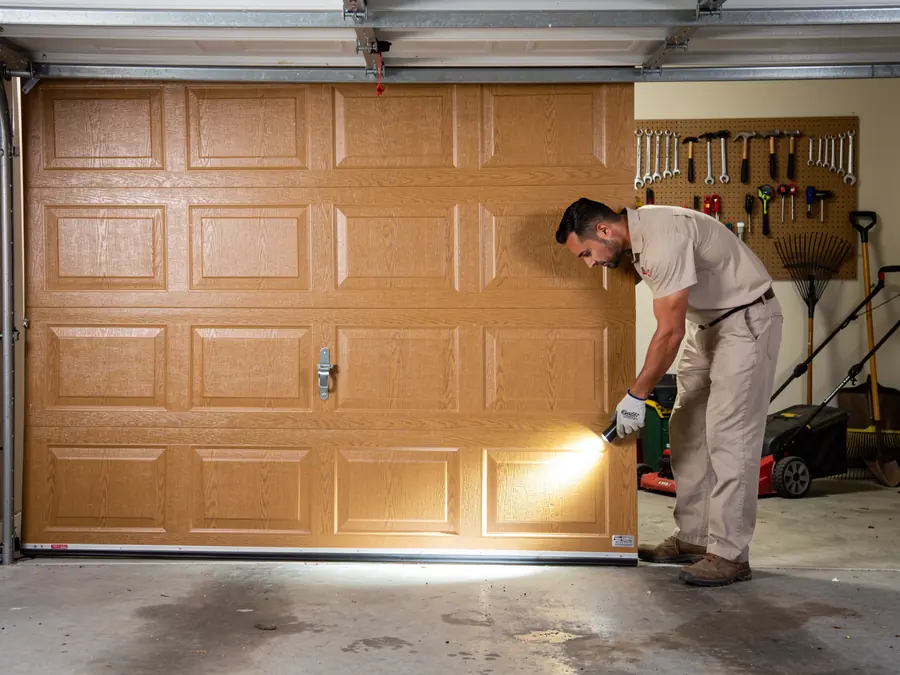
Streamwood's garage doors date mostly to 1981, the median year this side of the service area was built out, which means most of them are steel sectional panels - single-layer, not the double-wall insulated kind - hung on torsion springs sized for a 7-foot steel door. What drives the bill on a repair call here isn't the door's age so much as which part failed and how it failed. A snapped torsion spring on a 16-foot double door costs more in spring and labor than the same break on a 9-foot single, because the spring itself is bigger and the door is heavier to hold while we swap it. A stripped gear on an opener from that era is a different job than a spring, and a bent track from a car bump is different again. Streamwood's median household income, $101,049, sits close to the service area's overall $102,645, which doesn't change the parts but does shape what repair-versus-replace conversations look like. We don't quote a flat number over the phone for any of this - we look at the door, the spring size, and the opener before we say anything. One honest limit: if the door itself is rusted through at the bottom panel, a spring replacement won't fix the real problem, and we'll tell you that instead of selling a repair that doesn't last.
Booking a Visit
We run this call from Park Ridge, 17 miles south of Streamwood, so when you call we're scheduling a truck out, not dispatching from a yard around the corner. That distance doesn't change what we bring - springs, cable, rollers, and the openers we stock are the same whether the job is 2 miles or 17 - but it does mean we ask a few more questions up front: what the door's doing (won't open, won't close, off track, loud), what size it is, and whether it's a torsion or extension spring setup. That lets us load the right spring before we leave, instead of making a second trip. You can book through the Streamwood service page or check what we cover more broadly on the Park Ridge repair page. We're not promising a same-hour arrival because we're not sitting idle 17 miles away waiting on a call. We tell you a window when we schedule it, not before.
Doing It Yourself
Some of this is fine to do yourself. Tightening loose hinge bolts, lubricating hinges and rollers, clearing track debris, and swapping a worn weatherstrip at the bottom of the door are all reasonable weekend jobs on a steel door from this era. The torsion spring is not one of them. A spring sized for a 7-foot steel door holds enough stored tension to break a wrist or worse if the winding bars slip, and there's no safe shortcut around that regardless of how many videos make it look simple. Cable replacement carries the same risk, since the cable is under load from that same spring. If the opener itself is the problem - won't respond to the remote, grinds without moving the door - that's usually a logic board or a stripped gear, and diagnosing it without pulling the cover apart first is mostly guesswork. Our limitation here is the mirror of yours: we won't talk you through a spring swap over the phone, not because we're protecting the job, but because it's the one repair on this list that sends more people to the ER than any other home repair call.
Why This Fails Locally
The 1981 median build date matters here because of what builders put on these houses at the time: steel sectional doors, usually without a thermal break, hung with galvanized torsion hardware that was standard for the era but isn't rated the way current hardware is. Forty-some years in a cold-moderate climate band means that hardware has gone through four decades of freeze-thaw cycles on the track mounts and the spring anchor bracket. Galvanized coating wears thin at the weld points first, and that's where you see surface rust start, long before the panel itself looks bad. Across the wider service area, which spans roughly 399,153 households and 195,321 owner-occupied houses, Streamwood's own 13,041 households sit squarely in the newer half of that stock, built when codes called for different hardware than the pre-1960s neighborhoods closer to Park Ridge. None of this is unique to one house - it's the standard build pattern across this part of the service area, which is why the failures cluster the way they do: spring fatigue and bracket rust, not panel damage, account for most of the calls out this way.
Where This Job Goes Sideways
The call that starts as 'the door won't go up' and turns into something bigger is almost always the same shape: a torsion spring that broke days or weeks before anyone noticed, because the opener kept straining to lift the door anyway until the gear stripped or the motor burned out. On a 40-year-old setup, the opener is often not original - it's been swapped once already - but the track and the spring anchor bracket usually are original, and that bracket is the thing that's quietly rusted since 1981. Pull a new spring onto an anchor bracket that's lost integrity and you've fixed one problem while setting up the next one. The other way this goes sideways: a homeowner replaces one spring on a double door and leaves the second, older spring in place, because it hasn't broken yet. Springs on the same door wear at close to the same rate, and the second one going a month later with uneven tension is a known pattern, not bad luck.
Stocked Parts
What's on the truck for Streamwood calls looks specific because the door stock here is specific: torsion springs sized for 7-foot and 8-foot steel sectional doors, standard-width rollers and hinges for non-insulated single-layer panels, and the cable gauge that matches those spring sizes. We don't stock parts for insulated double-wall doors or for the older wood-panel doors you'd find on houses built decades before 1981, because that's not what's on the ground out this way. Openers are a mixed bag - some houses still run originals from the 80s, most have been swapped at least once - so we carry the logic boards and gear kits for the chain and belt-drive models that replaced them, not for units that haven't been sold in decades. The gap in our stock is anything custom: a non-standard door width, a specialty finish, or a part for an opener brand that never had wide distribution here. Those we order in, and we say so on the call rather than make you wait at the door for a part we don't actually have.
Frequently asked questions
Why does my 1980s garage door need a different spring than a newer one?
Doors from Streamwood's 1981 median build year are steel sectional panels without a thermal break, sized and weighted differently than today's insulated doors. The torsion spring has to match the door's actual weight, so a spring that fits a newer insulated door usually won't hold a non-insulated steel door from this era correctly.
How far out does Park Ridge Garage Door Pros travel for Streamwood calls?
We come from Park Ridge, about 17 miles away. We don't keep a separate depot in Streamwood, so when you book, we schedule a truck window rather than promise a same-hour arrival, and we load the parts for your specific door and spring size before we leave.
Can I replace a broken torsion spring myself?
We don't recommend it. The spring on a 7-foot steel door holds enough tension to cause serious injury if it's wound or unwound without the right bars and technique. Lubricating rollers, clearing track debris, or swapping weatherstrip are fine DIY jobs; the spring and cable are not.
Why did my second spring break a month after I replaced the first one?
Springs on the same door typically wear at close to the same rate. If one breaks, the other has usually absorbed similar stress over the decades and is close behind. Replacing both at once is the more common fix for exactly this reason.
More garage door services in Streamwood
Book garage door service in Park Ridge
Call now or request a quote - tell us what the door is doing and where you are.