
Park Ridge, IL · Garage Door Service
Why Park Ridge Garage Doors Let the Cold In
Park Ridge houses built between 1938 and 1996 lose heat fast through old garage door seals. Here's what cold-climate drafts do to doors from that era and when to call.
- Repairs & new doors
- Springs & openers
- Serving 4 nearby communities
The Problem
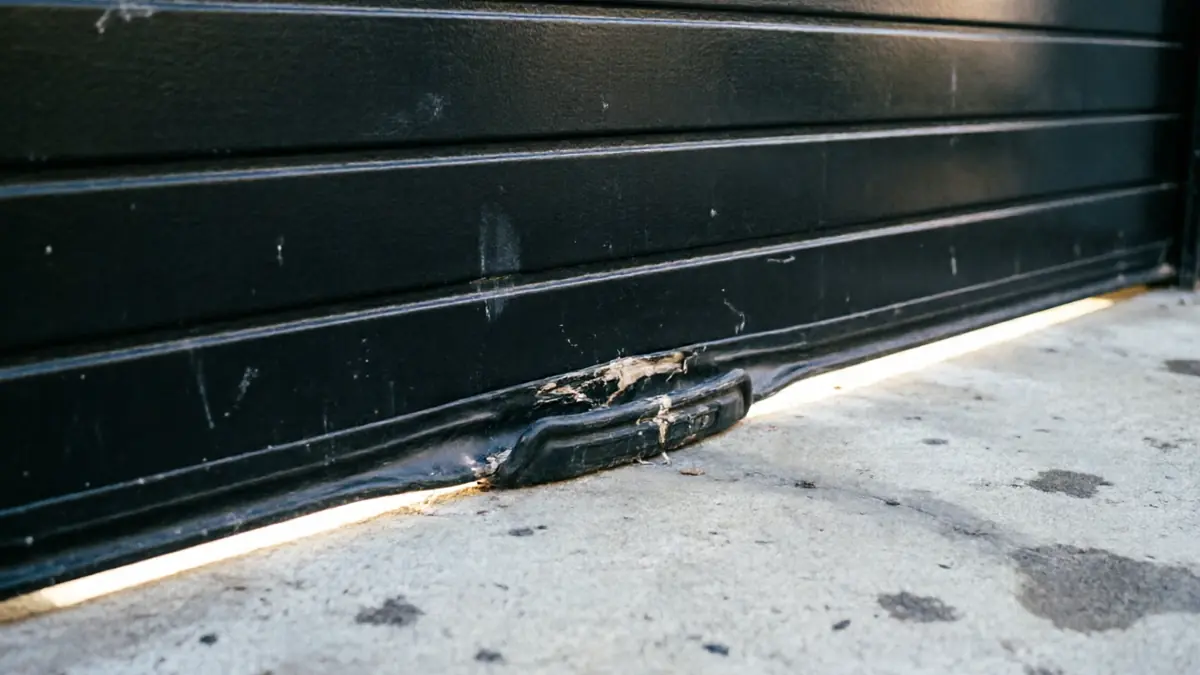
Most of the garage doors we get called out to in Park Ridge sit on houses built somewhere between 1938 and 1996, with the bulk of that stock going up in the 1960s and '70s. Doors and door openings from that era were built to a different standard than what you'd get today. The rubber or vinyl strip along the bottom of the panel, and the thin vinyl flap running up each side of the frame, were never meant to last fifty-plus years, and in a lot of these garages they haven't been touched since the house was built.
What you notice first isn't usually the seal itself. It's a line of daylight under the door on a sunny afternoon, a cold draft across the garage floor that reaches the mudroom door, or a skin of frost forming along the bottom panel on the inside face in January. On older steel doors from this period, the panel itself can be slightly bowed or the track slightly out of plumb after decades of settling, which means a new strip of weatherseal doesn't always sit flush even when it's a correct size and freshly installed.
This isn't cosmetic. A gapped seal on a door this old is doing the opposite of its job.
What Local Conditions Do
Park Ridge sits in a cold, moderate climate band, which means winters bring sustained stretches below freezing, not just the occasional cold snap. That matters for a door built in the 1960s or '70s because the original vinyl seals were rated for a mild freeze-thaw cycle, not decades of repeated contraction in deep cold followed by spring thaw.
Vinyl that's been through forty or fifty winters here gets brittle. It cracks at the corners first, usually where the bottom seal meets the track, and that crack widens every winter until the seal is basically two pieces held together by friction. Steel panels from this era also contract measurably in cold weather, which can pull a seal that fit fine in August away from the frame by December. We see this show up as a seasonal complaint: the same door seals fine all summer and starts leaking air again every November.
The freeze-thaw cycle also affects the slab itself. Older garage floors in this part of town have often settled or cracked slightly at the threshold, which means even a brand-new bottom seal can't form a full seal against an uneven concrete edge.
When to Get Help
If you can see daylight under the door in more than one spot, or feel a steady draft rather than an occasional gust, the seal has likely failed rather than just worn thin. That's worth a look before the coldest part of winter, not after a pipe near the garage wall has already frozen.
If the door is original to a house built in the 1950s or '60s, and the track or panel shows visible bowing, a new seal alone may not solve the draft. Call for a look if you're replacing seals for the second time in a few years on the same door. That usually points to a track or panel problem, not a seal problem, and swapping vinyl over and over is money spent on the wrong fix.
Doing Nothing For Now
Not every gap needs a service call right away. If it's a small draft along one bottom corner and the rest of the seal looks intact, a hardware-store weatherstrip kit can buy you a season, especially on a door that isn't original to the house. We'd rather tell you that than have you pay a call-out fee for a five-minute fix.
Where we draw the line: if the seal failure is tied to a bowed panel or a track that's pulled away from the frame, patching the vinyl won't fix the real problem, and you'll be back here next winter with the same draft. On a door old enough to be original to a 1960s or '70s build, that's usually the point where repair cost starts competing with replacement cost, and it's worth getting that compared honestly rather than guessed at.
Frequently asked questions
Why does my garage door only leak air in winter?
Vinyl seals from the 1960s and '70s weren't built for decades of sustained sub-freezing cold. The material gets brittle and shrinks slightly in deep cold, pulling away from the frame, then seems to seal fine again once it warms up in spring. That seasonal pattern is a strong sign the seal itself, not the door operation, is the issue.
Is frost on the inside of my garage door normal?
On an older, uninsulated steel door in this climate, some condensation is common. A line of frost specifically along the bottom panel, though, usually means cold air is moving past a failed bottom seal rather than just sitting still. Worth checking the seal before assuming it's just normal winter condensation.
My house was built in the 1960s - is the door original?
Possibly. A lot of houses in this part of town date to that decade, and original doors and track hardware from that era are common. We can't tell you without seeing it, but if the seal keeps failing in the same spot, an older panel or track is worth ruling out.
Related garage door services in Park Ridge
More garage door guides
Book garage door service in Park Ridge
Call now or request a quote - tell us what the door is doing and where you are.